
Aberdeen, old granite, new horizons
Aberdeen has lived many lives: a medieval harbour and fishing town, then Europe’s oil capital after North Sea discoveries in the late-1960s and 1970s, and now a city deliberately steering toward an energy-transition future under a 2045 net-zero routemap. Its granite streets, Doric humour and sea-salt light feel unchanged, yet the conversation is different: rigs and research labs sit in the same sentence; decommissioning, offshore wind and CCUS share vessels, skills and quays. It’s a place that does “beginnings” well—practical, outward-looking, and ready to fold new work and new crafts into an old port’s rhythm.

Structural shifts that felt unmistakable
1. “Net zero / energy transition” is no longer a side note but the structuring narrative. With OEUK leadership foregrounding “Unlocking Europe’s Potential in Offshore Energy,” the programme placed Oil & Gas, Digital and Net Zero on equal footing; the discourse has moved from talking about transition to doing business within the transition.
2. The exhibitor mix is tilting toward low-carbon technologies and green assets. The show still felt “hundreds of exhibitors” and “tens of thousands of professionals” strong, yet the floor and agenda were far more balanced across offshore wind, CCUS, digitalisation, and decommissioning/P&A—evidence that the product mix is getting greener without losing scale.
3. From a 2021 pilot to a 2023–2025 fixture: the Energy Transition zones are now embedded infrastructure. What began with early “Energy Transition” and “Decommissioning” theatres has matured into an established landscape—Offshore Wind Hub/Theatre, Hydrogen Hub, “Towards Net ZerOE” trails and dedicated transition zones—turning “net zero” from a headline into a procurement and delivery gateway.
4. Green energy’s share is rising, and traditional industry is redesigning production and construction around net-zero and sustainability. Official tracks now list Offshore Wind, CCUS, Decommissioning and Digitalisation alongside O&G, while UK cluster pathways (HyNet, East Coast, ACORN, etc.) and funding commitments give contractors a clear brief to bring electrification, low-carbon materials, digital twins and modular decommissioning directly into core delivery packages.
5. “Ending well and returning to nature” is materially more prominent: P&A and decommissioning have moved centre-stage. Since 2021, decommissioning content has stepped into the spotlight; in 2025, exhibitors emphasised life-of-asset integrity management—plug design, risk quantification, permitting/compliance and auditable evidence packs (MRV)—which aligns with a mature North Sea’s late-life portfolio.
6. CCS/CCUS projects are multiplying, and monitoring is shifting to “continuous and auditable.” Beyond dedicated CCUS sessions and zones, conversations focussed on reservoir/caprock integrity with digital, always-on monitoring—distributed fibre-optic sensing (DAS/DTS/DSS) came up repeatedly as a time-lapse, repeatable, compliance-ready evidencing tool for both CCUS and late-life/abandonment contexts.
Three things I felt on the floor
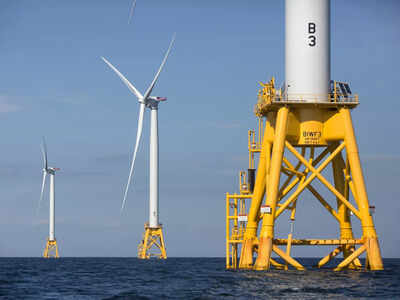
· The “offshore wind voice” is louder and more specialised. With Offshore Wind theatres/hubs and sponsors drawn from foundation/installation leaders (e.g., Acteon) alongside majors (e.g., TotalEnergies) and the Net Zero Technology Centre, wind now co-habits the supply chain with oil & gas as if they were two divisions of the same industrial base.
· “Net zero” is baked into oil & gas core proposals. Many traditional contractors presented decarbonisation roadmaps—efficiency and electrification, digital operations, low-carbon materials and construction, plus decommissioning/P&A—inside FPSO upgrades, platform life-extension, compression/injection work scopes, rather than as optional add-ons.
· Booth conversations beat auditorium keynotes for practicality. Like 2023, but further in 2025, the talk track was KPIs and compliance pathways you can actually buy: MRV for CCUS, decommissioning permit checklists, and the hard scheduling trade-offs when wind and oil & gas share marine spreads and crews.
One-line takeaway
OE25 reinforced that the North Sea’s future is not a binary of “oil & gas or new energy,” but the re-industrialisation of the existing value chain under a net-zero constraint—offshore wind, hydrogen, CCUS, P&A/decommissioning and digital monitoring (including distributed fibre optics) planned on the same Gantt chart and sharing the same logistics is how delivery will actually look post-2025.

 Prev
Prev
 Next
Next
 To list